Pages

Wednesday, November 7, 2012

Elita 5 - Degjo (Official Video HD)

El Shaarawy - Goal 2012 HD

Alexis Sanchez // 2012 // The Gladiator // HD //

Saturday, September 29, 2012

Worker killed in sawmill accident

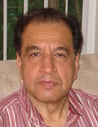
A 54-YEAR-OLD man has died after an accident at a sawmill. Peter Lennon, pictured, was killed shortly before 9am yesterday at Diamond & Son timber yard where he worked on New Mills Road in Coleraine, Co Derry. The Health and Safety Executive are investigating what is the fifth industrial and farming death within the last month. SDLP assembly member John Dallat said his workmates have been "deeply shocked" by his death. "I wish to offer my deepest sympathy to the family of the man who has tragically lost his life," he said. "I also sympathise with this colleagues who have been deeply shocked by this tragedy. "The sawmill has a long record of providing employment for many people and I know that the management will want to fully cooperate with any investigation which will undoubtedly follow. "It is indeed a shock to everyone." Alliance councillor Yvonne Boyle also offered her condolences. "This is a tragic accident," she said. "The Health and Safety Executive are investigating the circumstances and I hope that they will be able to provide answers to the family and ensure that this accident is not repeated. "There have been several workplace deaths in recent years, so I would encourage all businesses to ensure that their safety regulations are up to standard." The latest accident comes after the deaths of Noel Spence and his two sons, Ulster rugby star Nevin and father-of-two Graham in a slurry tank at their farm in Hillsborough, Co Down, and that of Fermanagh GAA star Brian Og Maguire, who was killed at a factory formerly owned by the Quinn Group in Derrylin, Co Fermanagh. Rasharkin man Francis Kennedy also died two days after being injured on a building site in Coleraine on September 11.

Parts of media act ‘unconstitutional’

Johannesburg - The SA National Editors' Forum (Sanef) on Friday welcomed the Constitutional Court's ruling that amended sections of the Films and Publications Act were unconstitutional. “Sanef is delighted with the judgment,” it said in a statement. “It represents an important affirmation of the principle that pre-publication restraints on speech are particularly constitutionally offensive, and that robust protections for free speech are fundamental to our democratic order.” The provisions, introduced in 2010, require that publications - excluding newspapers - are approved before publication if they contain sexual content. Print and Digital Media SA and Sanef argued that pre-publication classification should not be necessary for publications aimed at educating the public or condemning unsavoury sexual conduct. The classification process would delay publication and increase production costs because the act required the entire publication be screened and not only the contentious material. The High Court in Johannesburg previously found the provisions inconsistent with the Constitution. Sanef said: “The (Constitutional) court found that sections of the (act) requiring pre-publication classification of material dealing with 'sexual conduct' limited the freedom of expression vital to a democracy and offended against the Constitution.” “It ruled that the limitation was neither proportional to its objectives, nor justifiable, and that less restrictive means could be used to achieve the same outcomes.” While mainstream newspapers were exempted from these rules, all other publications including magazines, books, artworks and internet speech were not, it said. The requirement to submit for classification before publishing anything containing sexual conduct impacted on all publishers, so this was a victory for the public's right to receive information. The Constitutional Court's ruling in favour of Sanef and Print and Digital Media SA was a crucial test-case for freedom of expression, Sanef said. - Sapa

Kodak Getting Out of the Inkjet Printer Business

As part of its process to get out of bankruptcy, Eastman Kodak says it will stop selling inkjet printers in 2013 and instead focus on selling ink for the printers it has already sold. Just a few years ago the company stopped making film to focus on the printer business, which it is now exiting. In a motion to the bankruptcy court, Kodak said it is making substantial progress toward reorganization goals since filing for Chapter 11 early in 2012. Aimed at emerging from Chapter 11 “Kodak is making good progress toward emergence from Chapter 11, taking significant actions to reorganize our core ongoing businesses, reduce costs, sell assets and streamline our organizational structure,” said Antonio M. Perez, Kodak chairman and CEO. “Steps such as the sale of Personalized Imaging and Document Imaging, and the Consumer Inkjet decision, will substantially advance the transformation of our business to focus on commercial, packaging and functional printing solutions and enterprise services. As we complete the other key objectives of our restructuring in the weeks ahead, we will be well positioned to emerge successfully in 2013.” Kodak said it remains committed to its installed base of consumer inkjet printer customers who will still be able to purchase Kodak ink to operate the devices. Diane, of Prescott, AZ, isn't concerned about ink so much as she is the service on her ESP 520, which she says she purchased in November 2010. "On August 9, 2011, it stopped printing," Diane wrote in a ConsumerAffairs post. "I was told I needed a new print head and was sent a whole new printer. On August 24, 2012, the print head went out again. This time, I had to buy my own. On September 21 the print head quit again. I'm not investing any more money in this piece of junk. No more Kodaks for this kid." Savings expected The company said that in the near term, it expects it will begin realizing savings from its new, more strategically focused business, workforce reductions and other cost-reduction initiatives. Kodak said it continues to look for ways to streamline operations and generate profits. “The actions we are taking are significant steps toward our successful emergence,” said Perez. “We are committed to take the remaining steps required for our emergence in 2013 as a profitable, sustainable company.” Founded as Eastman Kodak Company in 1892, the company has struggled to find its footing in the digital age. The company last reported a profit in 2007 as it moved into producing digital cameras and office equipment.

While Iranian President Mahmoud Ahmadinejad soaks up Manhattan high life, his underlings go on shopping spree at discount chains Payless, Costco, Walgreens and Duane Reade

While President Mahmoud Ahmadinejad leisurely relishes the Manhattan highlife, his Iranian underlings have been scouring the town for low prices — including cheap shoes. Bargain-hunting members of the huge visiting delegation eagerly visited a Costco, a Payless shoe store, a Walgreens and a Duane Reade in recent days while hunting for discount products in short supply back home: Shampoo. Soap. Vitamins. Tylenol. READ MORE: TWITTER REACTS TO AHMADINEJAD'S UNITED NATIONS SPEECH “Since they are under sanctions, they can’t get this stuff,” a man assigned to work with the Iranians told the Daily News on Wednesday. “. . . (And) their money is weak compared to the dollar.” One Iranian visitor debated dropping $40 for a pair of kids’ shoes Monday at a Payless on Fifth Ave. before finally springing for the footwear, the delegation insider said.” AHMADINEJAD YOM KIPPUR ADDRESS TO U.N. DRAWS PROTESTERS The inexpensive footwear was enough to almost empty the Iranian’s wallet. The trip to a Harlem Costco secured an assortment of wholesale shampoos, while a drugstore visit brought more than a dozen bottles of vitamins and Tylenol. While the Iranians scrambled for the staples of most Western bathrooms, their Holocaust-denying boss remained comfortably ensconced in midtown’s posh Warwick Hotel.” Three personal chefs were at Ahmadinejad’s beck and call, and the Iranians booked two full floors in the luxury hotel, where suites can go for $1,600 a night, according to a hotel employee. The cooks brought in their own food, and the president’s men dined on the second floor. Iranian President Mahmoud Ahmadinejad addresses the United Nations General Assembly -- on Yom Kippur. Outside the W. 54th St. entrance, visitors have been required to pass through a metal detector and run any bags through a screening machine. The intense security ensures that Ahmadinejad never rubs elbows with local riffraff — or the average discount shopper. The visible security force at the posh hotel commissioned by William Randolph Hearst in 1924 includes at least a dozen federal officers assigned to protect visiting dignitaries. Ahmadinejad entered and departed the hotel via a security entrance covered by a white tent, offering passersby little more than a glimpse of the tieless tyrant. Tourist Susan Meares, 68, of Sydney, Australia, found the whole thing a bit difficult to endure. IRAN FLUNKY GETS PUNCHED IN THE TUMMY “I think the staff were really fed up,” she said Wednesday. “The whole place is flooded with Iranians. And the security — it’s horrible.” A 40-year-old visitor from Germany was equally spooked. “I thought somebody would throw a bomb or something,” she said. But she was impressed by most members of the expansive and expensive Iranian entourage when they met in the hotel. “They were very nice people, especially the ladies,” she said. “When I said, ‘Where are you from?’ they said, ‘Persia.’ They didn’t want to say they were from Iran.” The two-term president was criticized at home for bringing an estimated 140 people along for his final UN speech as Iran’s leader. “Many . . . have only traveled there for a picnic,” sniped Mansour Haghighatpour, deputy head of the parliamentary committee on national security. The delegation insider disagreed, saying the guests wanted no part of jewelry stores, boutiques or high-end retailers — like the plush Lord & Taylor directly across Fifth Ave. from the Payless. Instead, they preferred any drugstore where they could stock up on over-the-counter medication. “They spend their day buying a lot of medicine,” he said. After their Payless visit, a quartet of Iranians were rousted by the NYPD over an alleged anonymous report of a weapon in their car. Police couldn’t immediately verify that account. “They just wanted to show them, ‘We are watching you,’ ” the insider said. “You know how New York City is.” The cut-rate shopping sprees come despite an assortment of landmarks within walking distance of the hotel: Central Park, Rockefeller Center and Carnegie Hall. While their leader directs endless vitriol at the United States, the Iranian visitors did make sightseeing trips to one unlikely destination: The Statue of Liberty. “They’re having a good time here,” said the insider. “Especially the families. For them, it’s like a vacation.”

New Business Models Drive M2M Technology Revenue for CSPs

Today’s digital lifestyles increasingly rely on communications between machines. Hence, industries like automotive, utilities, healthcare and agriculture have started adopting machine-to-machine (M2M) communications to reduce operational cost, improve productivity and enhance the customer experience, according to David Ranjit William of Aricent (News - Alert) Group, in an opinion column for RCRWireless. William’s column presented M2M revenue growth data gathered by market research firm Machina Research. It predicts that M2M revenue will grow to more than $750 billion by 2020, with the United States and China being the biggest adopters. The Aricent Group (News - Alert) executive also indicated that communication service providers (CSP) will play a pivotal role in the delivery of M2M services as they provide connectivity for M2M solutions. According to Forrester (News - Alert) Research, global connectivity revenue will account for $17 billion by 2016. However, Forrester’s study shows that during the same period, fixed line and voice revenue erosion will be around $116 billion. To bridge this fiscal gap, according to William, CSPs are adopting new business models to become M2M solution providers. Thus, CSPs have the ability to provide cross industry analytics to move up the value chain. Meanwhile, as CSPs change their existing business models, they should also define the industry segments they will pursue, as they may not have the necessary domain expertise to address all industry segments. “As industries intersect e.g. energy and automotive, mobile and finance, etc., CSPs could extend their OSS/BSS capabilities to support more communication enabled industries,” wrote William. Some of these examples include extension of billing for utilities, remote management of devices, delivery of content, and communication management for M2M devices. To deliver end-to-end M2M solutions, the research firm Machina Research is predicting the emergence of CSP (News - Alert) alliances. The columnist also indicates that CSPs have access to M2M specific data and are best positioned to perform analytics on data from different industry solutions, providing them with the ability to create more meaningful cross industry value added services.

Hackers, Possibly From Middle East, Block U.S. Banks' Websites

The financial and banking industries are on high alert tonight as a massive cyberattack continues, with potentially millions of customers of Bank of America, PNC and Wells Fargo finding themselves blocked from banking online. "There is an elevated level of threat," said Doug Johnson, a vice president and senior adviser of the American Bankers Association. "The threat level is now high." "This is twice as large as any flood we have ever seen," said Dick Clarke, an ABC News consultant and former cybersecurity czar. Sources told ABC News that the so-called denial of service attacks had been caused by hackers from the Middle East who had secretly transmitted signals commandeering thousands of computers worldwide. Those computers -- or "zombies" -- were then used to overwhelm bank websites with a barrage of electronic traffic. Different banks have been targeted on different days. Today was PNC Bank's turn: For three hours, ABC News tried to get on the PNC website to no avail. On Facebook, a frustrated customer, Cynthia Schirm, wrote, "Trying to pay bills. This is ridiculous." "Hopefully it can be up soon," wrote Stacy Briggs-Gerlach. "Never realized how dependent I am on it!!!" A group of hackers calling themselves Izz ad-Din al-Qassam warned the financial industry that it was going to attack in retaliation for the controversial film "The Innocence of Muslims," which provoked outrage across the Muslim world earlier this month. The U.S. said it suspected that hackers in Iran were also involved. "This is the first time that we know about, where a Middle Eastern entity, perhaps a Middle Eastern government, has attacked websites, critical infrastructure, in the United States," Clarke said. Even though hackers have not been able to steal any money during these attacks, authorities say they fear the next generation of wide-scale cyber assaults could be more devastating. "If they get inside the banks, they can move money around and cause financial chaos," Clarke said.

Vatican: American Jesuit and French Philosopher win Ratzinger Prize

Vatican Radio) – The winners of the second edition of the “Ratzinger Prize in Theology” were officially announced Friday: They are a French philosopher Rémi Brague and American patrologist Fr. Brian E. Daley S.J. The award will be conferred on the winners Oct. 20, 2012, during the Synod of Bishops on the New Evangelization. Rémi Brague, born 1947, married and father of four, is professor emeritus of medieval and Arabic philosophy at the University Panthéon-Sorbonne (Paris I) and professor of philosophy of the European religions (Romano Guardini Chair) at the Ludwig- Maximilian University in Munich. Brian E. Daley, S.J., is the Catherine F. Huisking Professor of Theology at the University of Notre Dame (Indiana). He is a contributor to the English edition of Communio magazine, founded by Hans Urs von Balthasar, Henri De Lubac and Joseph Ratzinger. The “Ratzinger Prize” is often referred to as the “Nobel of Theology” and is sponsored by the Joseph Ratzinger (Benedict XVI) Vatican Foundation. Pope Benedict XVI himself approved the launch of the Foundation in 2010, following keen requests from academics, philosophers and theologians worldwide. The aim of the foundation is to “promote the publication, distribution and study of the writings of former university professor Joseph Ratzinger”. And it finances its activities through the publication and sale of Ratzinger’s works. In 2010, the Holy Father also decided to establish a Prize in Theology, in recognition of the work undertaken by scholars in three specific areas: Sacred Scripture study, Patristics and Fundamental Theology. The first recipients of the award, in 2011, were: Professor Dr. Manlio Simonetti, an Italian Professor and expert in Ancient Christian Studies and Patristic Biblical Interpretation (relating to the Church Fathers), who used to teach at Rome's La Sapienza University; the Reverend Father Professor Dr. Olegario González de Cardedal, a Spanish priest and Professor specializing in Dogmatic and Fundamental Theology at the Pontifical University of Salamanca in Salamanca, Spain; and the Reverend Cistercian Father Professor Dr. Maximilian Heim, a German Cistercian Abbot (of Heiligenkreuz Monastery in Austria), who teaches dogmatic and fundamental theology at the University of Heiligenkreuz. As in 2011, the Pope himself will award the two researchers. In the course of the first award ceremony, held in the Clementine Hall of the Apostolic Vatican Palace, Pope Benedict spoke of the importance of theology as a “use of reason that seeks for truth”. .Biography of two recipients: Rémi Brague, born 1947, married and father of four, is professor emeritus of medieval and Arabic philosophy at the University Panthéon-Sorbonne (Paris I) and professor of philosophy of the European religions (Romano Guardini Chair) at the Ludwig- Maximilian University in Munich. He studied philosophy and the classical languages at the Ecole Normale Supérieure in Paris, and later Hebrew and Arabic. He taught philosophy for two years at the University of Burgundy (Dijon), then twenty years at the Sorbonne. He has taught at Munich since 2002. He was a visiting professor in Penn State, Boston (B.U. and B.C.), Lausanne, Milan, Pamplona. He is the author of Eccentric Culture (South Bend, 2002), The Wisdom of the World (Chicago, 2003), The Law of God (Chicago, 2007), The Legend of the Middle Ages (Chicago, 2009), On the God of the Christians (South Bend, 2012). Rémi Brague is a member of the Institut de France (Académie des Sciences Morales et Politiques). Brian E. Daley, S.J., is the Catherine F. Huisking Professor of Theology at the University of Notre Dame (Indiana). A 1961 graduate of Fordham University (New York), he studied ancient history and philosophy at Merton College, Oxford, from 1961 to 1964, then entered the Society of Jesus. After theological studies in Frankfurt, Germany, where he was ordained priest on 25 July 1970, he returned to Oxford to do a D. Phil. in the Faculty of Theology, from 1972 until 1978. He then taught historical theology for eighteen years at the Weston Jesuit School of Theology in Cambridge, Massachusetts, before moving to Notre Dame in 1996. He is the author of The Hope of the Early Church (Cambridge, 1991; Hendrickson, 2002); On the Dormition of Mary: Early Patristic Homilies (St. Vladimir’s, 1998), and Gregory of Nazianzus (Routledge, 2006), as well as many articles. He is also the translator of Hans Urs von Balthasar, Cosmic Liturgy. The Universe according to Maximus the Confessor (Ignatius, 2003). Fr. Daley is the executive secretary of the Catholic-Orthodox Consultation for North America. CONFERRAL OF THE FIRST "RATZINGER PRIZE" ADDRESS OF HIS HOLINESS BENEDICT XVI Clementine Hall Thursday, 30 June 2011 Your Eminences, Venerable Confreres, Distinguished Ladies and Gentlemen, I would like first of all to express my joy and gratitude for the public recognition the award of this theological prize the Foundation called after me gives to the life work of two great theologians and for the sign of encouragement it offers to a theologian of the younger generation to continue on the way on which he has set out. A common path has bound me to Professor González de Cardedal for many decades. We both began with St Bonaventure and we let him indicate our direction. In his long life as a scholar, Prof. González has treated all the great topics of theology and not merely in reflecting or speaking of them in theory, but always by confronting them with the drama of our time, living and also suffering in a very personal manner the great questions of faith and with them the questions of the men and women of today. Thus the word of faith is not something of the past; in his works it becomes truly contemporary. Prof. Simonetti has approached the world of the Fathers in a new way, showing us with accuracy and care, what the Fathers say from the historical viewpoint; they become our contemporaries who speak to us. Fr Maximilian Heim, recently elected Abbot of the Monastery of Heiligenkreuz near Vienna, a monastery with a rich tradition, has assumed with this office the task of bringing a great history up to date and of leading it towards the future. In this task, I hope that his work on my theology, which he has given us, may be useful to him. I also hope that the Abbey of Heiligenkreuz will further develop in our time the monastic theology that has always accompanied university theology, thereby forming Western theology as a whole. However, it is not my duty here to present a laudatio of the prizewinners, which Cardinal Ruini has already done competently. Yet the conferral of the Prize can perhaps afford us an opportunity to concentrate for a moment on the fundamental question of what “theology” actually is. Tradition tells us that theology is the science of faith. Here however the question immediately arises: is this truly possible? Or is it not in itself a contradiction? Is not science perhaps the opposite of faith? Does not faith cease to be faith when it becomes science? And does not science cease to be science when it is ordered or even subordinated to faith? These questions, which already posed a serious problem to medieval theology have become even more impelling with the modern concept of science and at first sight even seem to have no solution. We understand theology in this way because, in the modern epoch, it has withdrawn from vast sectors, primarily to the area of history, in order to demonstrate here its serious scientific character. It must be recognized with gratitude that this has led to the achievement of grandiose works and the Christian message has received a new light which is able to reveal its profound riches. Yet, if theology is totally relegated to the past, today it leaves faith in darkness. Then, at a second stage, the focus was on practice, to show how theology, in connection with psychology and sociology, could be a useful branch of knowledge that provides concrete instructions for life. This is important too, but if faith, the foundation of theology, were not at the same time to become the object of thought, if praxis were to refer only to itself or to exist only by what it borrows from the human sciences, it would then be emptied and deprived of a foundation. These approaches are therefore insufficient. However useful and important they may be, they would become an expedient if the true question were to remain unanswered. Briefly: is what we believe in true or not? The question about the truth is at stake in theology: its ultimate and essential foundation. Here a saying of Tertullian can help us take a step forward. He wrote: “Christ has surnamed himself Truth, not Custom” – non consuetudo sed veritas (On the Veiling of Virgins, 1, 1). Christian Gnilka has shown that the concept of “custom” can mean the pagan religions which, in accordance with their nature, were not faith but rather “custom”: one does what one has always done. Traditional forms of worship are observed and it is hoped thereby to maintain the correct relationship with the mysterious environment of the divine. The revolutionary aspect of Christianity in antiquity was precisely its break with “custom” out of love for the truth. Here Tertullian was speaking above all on the basis of the Gospel according to St John, in which is found the other fundamental interpretation of the Christian faith which is expressed in the designation of Christ as Logos. If Christ is the Logos, the truth, human beings must respond to him with their own logos, with their reason. To arrive at Christ they must be on the path of the truth. They must open themselves to the Logos, to creative Reason, from which their own reason derives and to which it refers them. From this it may be understood that Christian faith, by its very nature, must bring theology into being, must question itself on the reasonableness of faith – although of course the concept of reason and that of science embrace many dimensions — and in this way the concrete nature of the connection between faith and reason must be fathomed ever anew. Although in Christianity the fundamental connection between Logos, truth and faith is clearly presented, the concrete form of this connection has given rise and is giving rise to ever new questions. It is clear that today, this question which occupied and will occupy every generation, can be addressed neither in detail nor broadly. I would like to try to make one small suggestion. In the prologue to his Commentary on the Sentences St Bonaventure spoke of a double use of reason. He spoke of a use that is irreconcilable with the nature of faith and a use that instead belongs to the very nature of faith. Violentia rationis therefore exists, the despotism of reason which makes itself the supreme and ultimate judge of all things. This kind of use of reason is certainly impossible in the context of faith. What did Bonaventure mean by this? A sentence of Psalm 95[94]:9 can reveal its meaning to us. Here God says to his people: “In the wilderness, when your fathers tested me, and put me to the proof, though they had seen my work” (vv. 8-9). A reference is made here to a dual encounter with God: they have “seen”. Yet for them this did not suffice. They “tested” God. They wished to subject him to experimentation. He was, so to speak, subjected to an interrogatory and had to submit to an experimental procedure of testing. This use of reason in the modern age has reached the climax of its development in the context of the natural sciences. Experimental reason largely appears today as the sole form of rationality that is declared scientific. What cannot be scientifically proven or disproven falls outside the scientific sphere. Within this framework great works have been achieved as we know; that this is right and necessary in the context of the knowledge of nature and of its laws no one would seriously question. Yet there is a limit to such a use of reason: God is not an object for human experimentation. He is the Subject and manifests himself solely in the relationship of person to person: this is part of the person’s essence. In this perspective Bonaventure mentions a second use of reason that applies to the context of the “personal”, to the important questions implied by actually being human. Love desires to know better what it loves. Love, true love, does not make people blind but seeing. The thirst for knowledge, for a true knowledge of the other person, is part of love. For this reason the Fathers of the Church found the precursors and forerunners of Christianity — outside the world of the revelation of Israel — not in the context of formal religion, but on the contrary in human beings in search of God, in search of the truth, in the “philosophers”: in people who were thirsting for truth and were therefore on their way towards God. When this type of reason is not used, the great questions of humanity fall outside the context of reason and are left to irrationality. This is why an authentic theology is so important. Right faith directs reason to open itself to the divine, so that, guided by love for the truth, it may know God more closely. The initiative for this journey is with God, who has placed in human hearts the desire to seek his Face. On the one hand humility, which lets itself be “touched” by God, and on the other, the discipline bound to the order of reason that keeps love from blindness and helps to develop its visual power, are both part of theology. I am well aware that all this has not provided an answer to the question on the possibility and duty of right theology and that light has been shed only on the greatness of the challenge inherent in the nature of theology. Yet it is this very challenge that we human beings need, because it impels us to open our reason by questioning ourselves on the truth itself, on the Face of God. We are therefore grateful to the prizewinners who have shown in their work that reason, progressing on the path marked out by faith, is not an alienated reason but a reason that corresponds with its most exalted vocation. Many thanks.